
Most improvement work is expensive and time consuming. We have whole teams dedicated to transformation, costing organisations many hundreds of thousands of pounds, many without any visible return on investment. New systems, new training, new structures, new equipment and a shed load of business cases to justify all of it.
I am here to argue that without getting the basics in place first, you will continue to burn through your budget and continue to be frustrated. The things I am proposing cost nothing. They do not require a budget, business case, project plan or board level sign-off. They save time and money from day one, and any leader can start tomorrow. These things will fundamentally change the character of any team, and when aggregated, change the culture of an organisation.
I have witnessed these challenges in different roles. No organisation is perfect but I saw all of them in play consecutively when I worked for the NHS. The waste was in plain sight and somehow nobody seemed to notice it. These things are simple, but simple is not the same as easy. Each one requires discipline, consistency and in some cases discomfort.
- Your inbox is somebody else’s to-do list.
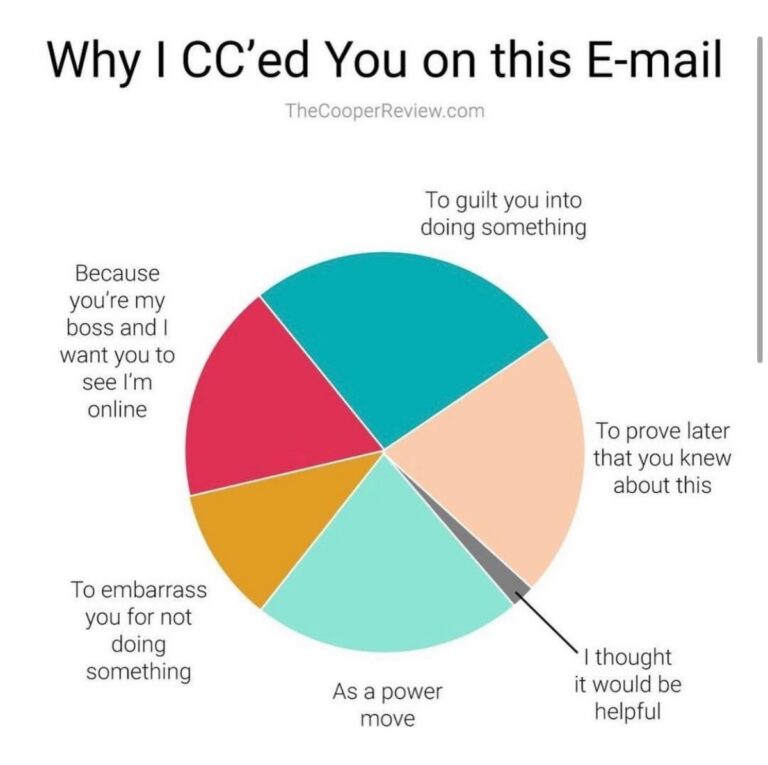
When I worked in the NHS I averaged 60-80 emails a day. A large chunk were emails I had been Cc’d into. They were information only with no action for me, but they sat there demanding attention all the same.
Most of us treat our inbox as a to-do list, but it is not, it is predominantly somebody else’s to-do list. Reacting to our inbox leads us to prioritise the urgent over the important. We have become addicted to being responsive and being a problem solver. That is not an efficient leadership approach.
There is a better way…
- Set fixed times to check your email. First thing, mid-morning, mid-afternoon, end of day. Ten to twenty minutes each.
- Create an Outlook rule so anything you are Cc’d into skips the inbox and lands in a separate folder you check once or twice a week. If you are not a “to” addressee, there is no action for you.
- Teach people how to communicate with you. If it is urgent, phone me, and I will answer unless I am in a meeting. If it is informal, Teams message me. If it needs my action, email me. If I just need to know, Cc me.
- Set response times to match. Teams within a few hours. Email by end of day, even a holding reply. Cc emails by the end of the week, if required.
One last thing to consider. If you think you get too many emails, count how many you send. You are probably part of the problem.
- If ten people sit in a one-hour meeting, it needs to deliver ten hours of value.
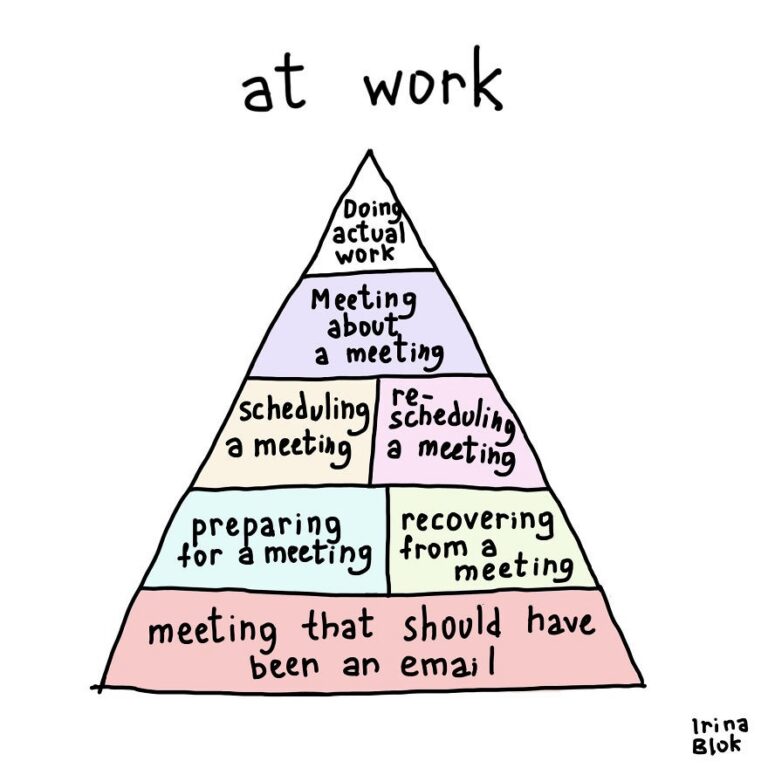
My lasting memory of the NHS is people filling their days with back-to-back meetings and wearing it like a badge of honour. It left them with no time for their team and no time for the actual work. In between meetings they were in their inbox. That is not leading, it is reacting, and it is why everything moved so slowly.
Do the maths on your meetings this week, then ask a few questions before you accept the next invite.
- Are you only there for information? Read the minutes.
- Do you leave with no actions? You were not needed.
- Is there an agenda? No agenda, no meeting.
- Could the meeting be an email? Then make it one.
- Would anyone notice if you did not attend? That is your answer.
The leaders that I thought did it well ran meetings of 30 or 45 minutes, not an hour, because the meeting will fill the time you give it. They opened with the purpose in one sentence rather than reading the agenda. If you cannot do that, the meeting is not ready. They invited contributors, and did not invite spectators. They ended with actions, each allocated to a named person and a deadline. Their meetings started and finished on time, and they did not keep everyone waiting for that one person who is always late.
- Why am I talking?
Some leaders talk far too much when they should be listening. It comes from a belief in a lot of senior people that you must have all the answers, solve every problem and be the one “in charge”. So you fill the silence with your opinion and labour the point long after it has been made.
I know this from experience. I was once given feedback in a 360 that I could dominate meetings, and I have been conscious of it ever since. It is an uncomfortable thing to read about yourself.
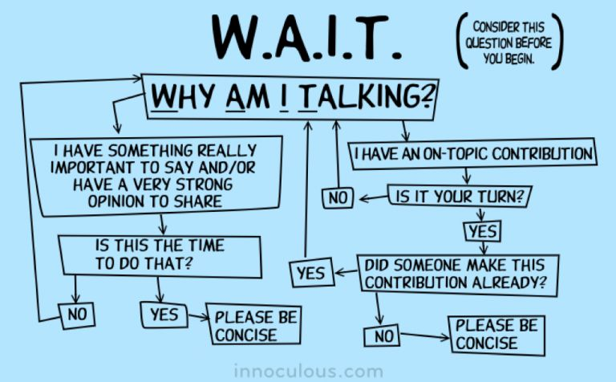
There is a simple model for it. W.A.I.T. Why Am I Talking. Before you speak, ask yourself why. Is it on topic, is it your turn, has someone already made the point. And if you do have something worth saying, say it and stop.
I saw the opposite time and again in the NHS. Meetings packed with people, a chair who dominated from start to finish, and everyone else contributing nothing. They left with no actions and no reason to have been there beyond information. Save yourself some time, just read the minutes.
Part of your job as a leader is to be heard. The bigger part is to listen, hold the space, and let others be heard. The best leaders I have worked with talked the least. They asked the questions and they listened.
- Busy is not a reason. It is an excuse dressed up to sound like one.
In the NHS, when actions were not completed, “I have been busy” or “I am waiting for someone else” were the standard excuses. Everyone accepted them, and so the pace of everything was glacial.
The problem is not the excuse, it is that the excuse always gets accepted. When a leader nods along with “I have been too busy,” they tell everyone that deadlines are negotiable, that effort matters more than outcome and that the standard is basically whatever people can get away with.
Accountability is not blame or punishment. It is owning the outcome, not the intention. The egg is broken, so saying you meant well does not unbreak it.
There is a better way if you build accountability into how the team works.
- Agree deadlines together rather than imposing them, because people hit the deadlines they helped set.
- When one is missed, ask what happened rather than why. Why invites a defence. What happened invites the truth.
- Separate the explanation from the excuse. “I was waiting for finance” is information, until you learn nobody chased finance and nobody flagged the risk. Then it is an excuse.
- Hold yourself to the same standard. If you miss a deadline, own it in front of the team. I broke the egg.
A team learns accountability from what leaders tolerate, not from what leaders say.
- Being late is not ok.
This was the one I struggled with most. People turned up late to everything and nobody blinked. Lateness was simply accepted.
In the Army, five minutes early was on time, and on time was late. As someone on LinkedIn highlighted to me, the Army also has a saying “hurry up and wait” so they just have people waiting anyway. But the contrast was hard to ignore and harder to get used to. One person ten minutes late to a meeting with ten people is not ten minutes lost. It is a hundred. It feels small to the latecomer but there is a larger issue in lost time. “Sorry, got caught up” happens sometimes, but it shouldn’t happen every time.
Start on time, finish on time, every time. No “let’s give people a few more minutes.” That is disrespectful to the people who made the effort to arrive on time. Being punctual takes no special skill, just respect for others and a sense of urgency.
The thread that runs through all five
None of these is a budget problem or a systems problem. Each one is a standard that has eroded over time, got accepted, and then became the culture.
None of these is complicated. On their own they are small, but cumulatively they have a massive impact on time, and time, which is staff wages, is your most expensive commodity.
Consider the scale of it. If every one of the 1.4 million people in the NHS recovered just one hour a week, that is more than 60 million hours a year. At average NHS earnings that is over one and a half billion pounds of staff time. One hour! Imagine two, or three.
The magic happens when they stop being one person’s habit and become how the place works. Small things, done by everyone, every day is not a marginal gain. That is a different organisation.
The standard you walk by is the standard you accept.